How We Validate Downstream Processors: Building Trust in Every Recovery Claim
By Cirqulus Solutions
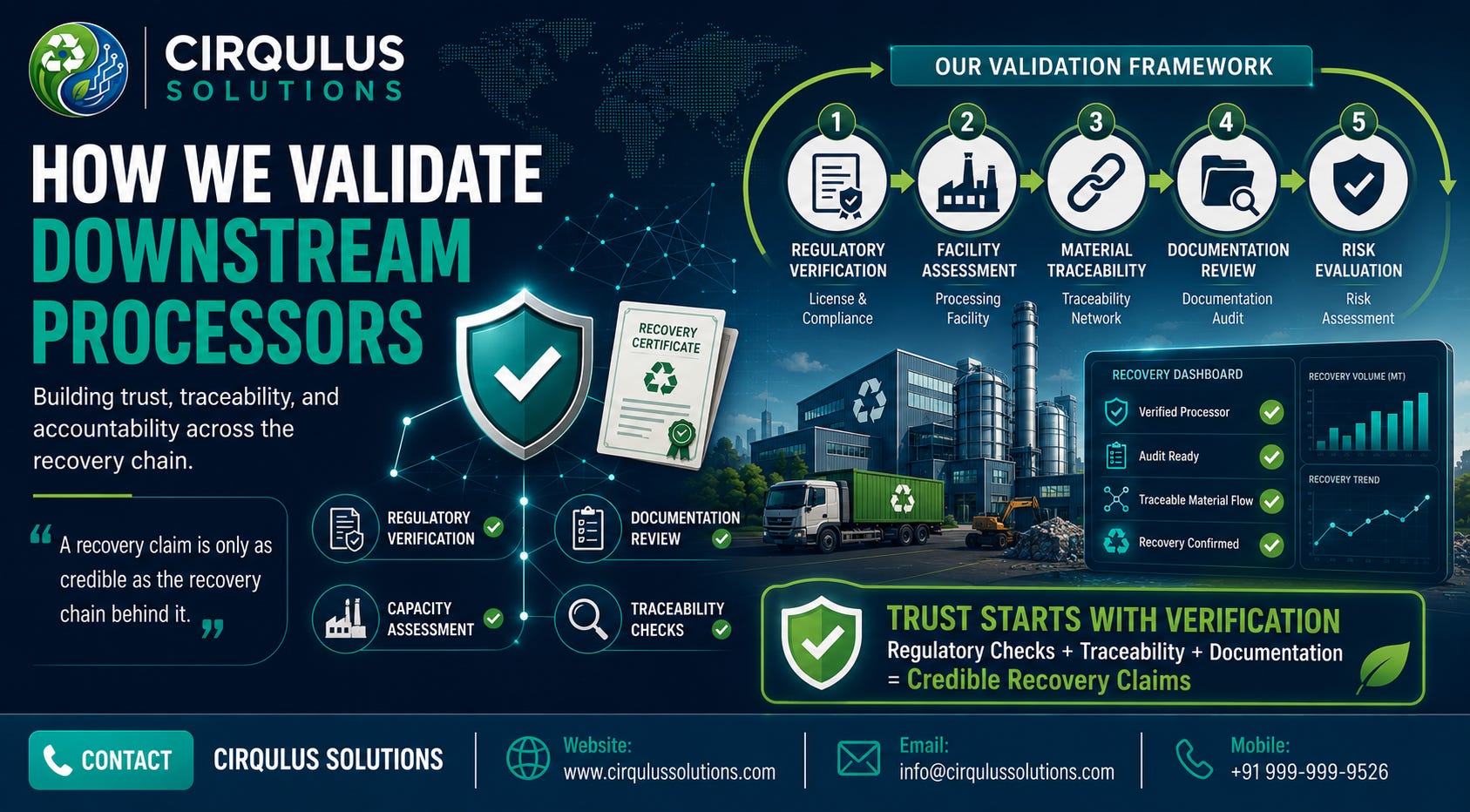
🔍 Trust in EPR compliance begins long before a recovery certificate is issued—it starts with verifying the recovery chain.
As India’s Extended Producer Responsibility (EPR) ecosystem continues to mature, producers are expected to demonstrate not only compliance but also accountability. Recovery claims are increasingly being scrutinized, making it essential to ensure that every downstream processor involved in the recycling journey operates with transparency, capability, and regulatory compliance.
A recovery claim is only as credible as the recovery chain behind it.
Unfortunately, relying solely on certificates or declarations without validating the processor can expose businesses to significant risks, including rejected EPR claims, audit observations, regulatory penalties, financial losses, and reputational damage. In today’s compliance environment, due diligence is no longer optional—it’s a business necessity.
Our latest article takes you behind the scenes of Cirqulus Solutions’ validation framework, highlighting the key steps we follow before working with downstream processors:
✅ Regulatory Verification – Confirming licenses, registrations, and statutory compliance to ensure processors meet all applicable regulatory requirements.
🏭 Facility Assessment – Evaluating processing infrastructure, operational capabilities, machinery, and recovery capacity to verify that facilities can genuinely handle the waste they claim to process.
🔗 Material Traceability – Establishing end-to-end visibility of material movement, ensuring that every stage of the recovery process is documented and verifiable.
📋 Documentation Review – Reviewing manifests, invoices, processing records, recovery documentation, and supporting evidence to validate every recovery claim.
⚠️ Risk Evaluation – Assessing compliance history, operational risks, and documentation quality before establishing long-term partnerships.
This structured approach helps create a recovery ecosystem built on trust, transparency, and accountability. It enables producers to make informed decisions, strengthens audit readiness, and ensures that sustainability commitments are supported by genuine environmental outcomes rather than paperwork alone.
At Cirqulus Solutions, we believe that compliance is not just about meeting regulatory requirements—it’s about building confidence across the entire recycling value chain. By combining regulatory expertise, robust validation processes, and end-to-end traceability, we help businesses reduce compliance risks while contributing to a more credible and sustainable circular economy.
As regulatory expectations continue to evolve, organizations that invest in verified recovery networks and transparent compliance practices will be better positioned to build stakeholder trust and achieve long-term sustainability goals.
Connect with us on how can we help you, email: info@cirqulussolutions.com
What businesses think about Extended producer responsibility and what it really means
#EnvironmentalAwareness #CircularEconomy #WasteManagement #Ewaste #Recycled #EcoFriendly #Sustainability #ZeroWaste #GreenPlanet #Business #WasteReduction #IndustrialRecycling #GoGreen #RecycleMetal #WasteReduction #SavePlanet #SaveThePlanet #ESGGoals #ResponsibleRecycling #EPR #extendedproducerresponsibility #cpcb #sustainability #esg #cirqulussolutions