Why Informal Recycling Still Dominates India's Waste Management Ecosystem
By Cirqulus Solutions
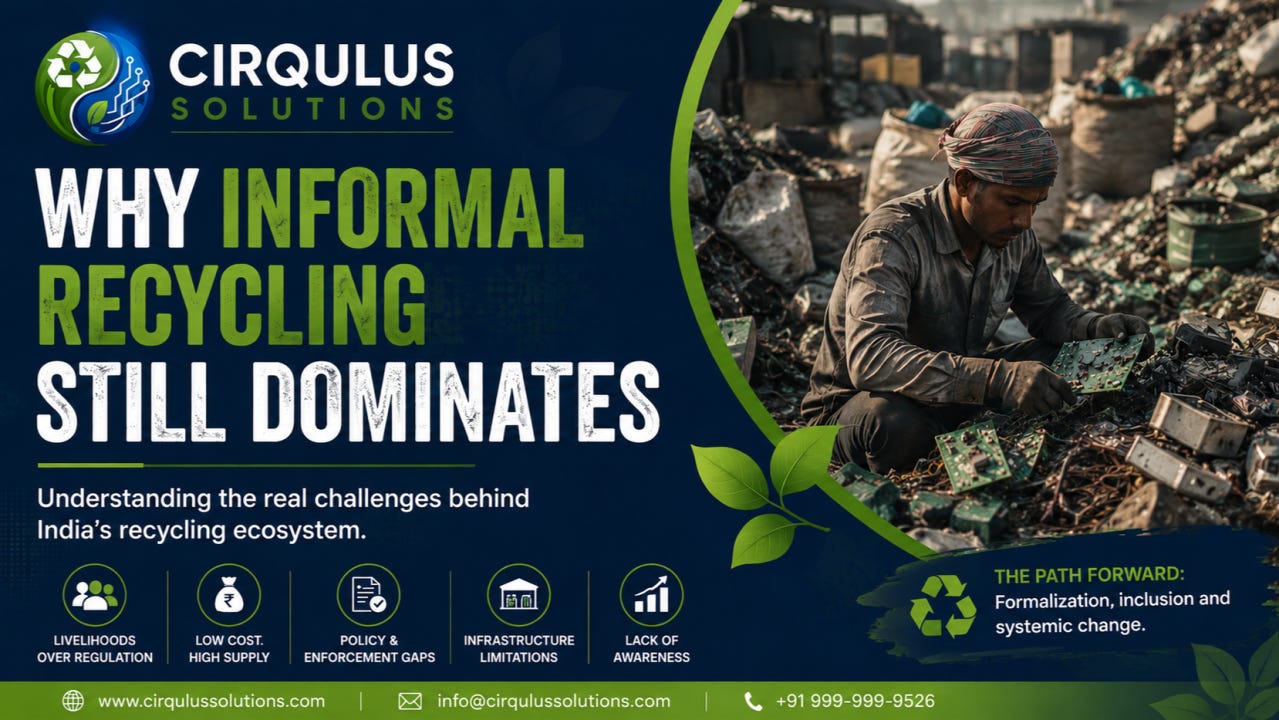
♻️ Why does informal recycling continue to dominate India’s recycling ecosystem despite growing regulations and EPR frameworks?
India has one of the world’s largest recycling ecosystems, but a significant portion of waste collection and material recovery is still managed by the informal sector. From waste pickers and scrap dealers to small aggregators, millions of people contribute to recovering valuable materials that might otherwise end up in landfills.
Their contribution is undeniable. They improve collection rates, reduce waste leakage, and support the recycling industry by ensuring materials continue to flow through the value chain. At the same time, the system faces several structural challenges that limit its ability to deliver safe, transparent, and fully compliant recycling outcomes.
Many informal operations work with limited infrastructure, lack standardized documentation, and operate outside formal compliance frameworks. This creates challenges in traceability, worker safety, environmental protection, and verification—issues that become increasingly important as India’s Extended Producer Responsibility (EPR) regulations continue to evolve.
The solution is not to replace the informal sector, but to strengthen it through integration and collaboration.
Formalizing recycling means creating systems where every stakeholder—from waste collectors and aggregators to recyclers and producers—can participate in a transparent, accountable, and sustainable value chain.
This requires:
✅ Better collection and segregation infrastructure.
✅ Digital traceability across the recycling journey.
✅ Stronger partnerships between producers, recyclers, and collection networks.
✅ Training and capacity building for informal workers.
✅ Fair economic opportunities that encourage participation in formal systems.
✅ Robust verification and reporting mechanisms to support EPR compliance.
As businesses take greater responsibility for post-consumer waste under EPR, the focus should extend beyond meeting compliance targets. Real progress is measured by how effectively materials are recovered, recycled, and returned to the economy while protecting people and the environment.
At CIRQULUS SOLUTIONS, we believe that the future of recycling depends on traceability, transparency, and collaboration. By connecting producers, recyclers, and collection networks through reliable compliance and reporting systems, we can help build a recycling ecosystem that delivers measurable environmental impact—not just regulatory compliance.
India’s circular economy cannot succeed without recognizing the role of the informal sector and creating pathways for its inclusion in formal, technology-enabled recycling systems.
A sustainable future begins when every stakeholder is part of the solution.
💬 What are your thoughts? Should India’s recycling policies place greater emphasis on integrating the informal sector into formal EPR systems? We’d love to hear your perspective.
Connect with us on how can we help you, email: info@cirqulussolutions.com
What businesses think about Extended producer responsibility and what it really means
#EnvironmentalAwareness #CircularEconomy #WasteManagement #Ewaste #Recycled #EcoFriendly #Sustainability #ZeroWaste #GreenPlanet #Business #WasteReduction #IndustrialRecycling #GoGreen #RecycleMetal #WasteReduction #SavePlanet #SaveThePlanet #ESGGoals #ResponsibleRecycling #EPR #extendedproducerresponsibility #cpcb #sustainability #esg #cirqulussolutions